Chairman’s letter to the community
Dear friends and fellow devotees,
Wish you all a Happy, Healthy and Prosperous New Year! May the almighty shower blessings on you and your family!
The THTCCB board of trustees extends our heartfelt wishes to you and your loved ones for a joyous New Year 2024! Reflecting on the previous year, we are filled with gratitude for the success of 2023.
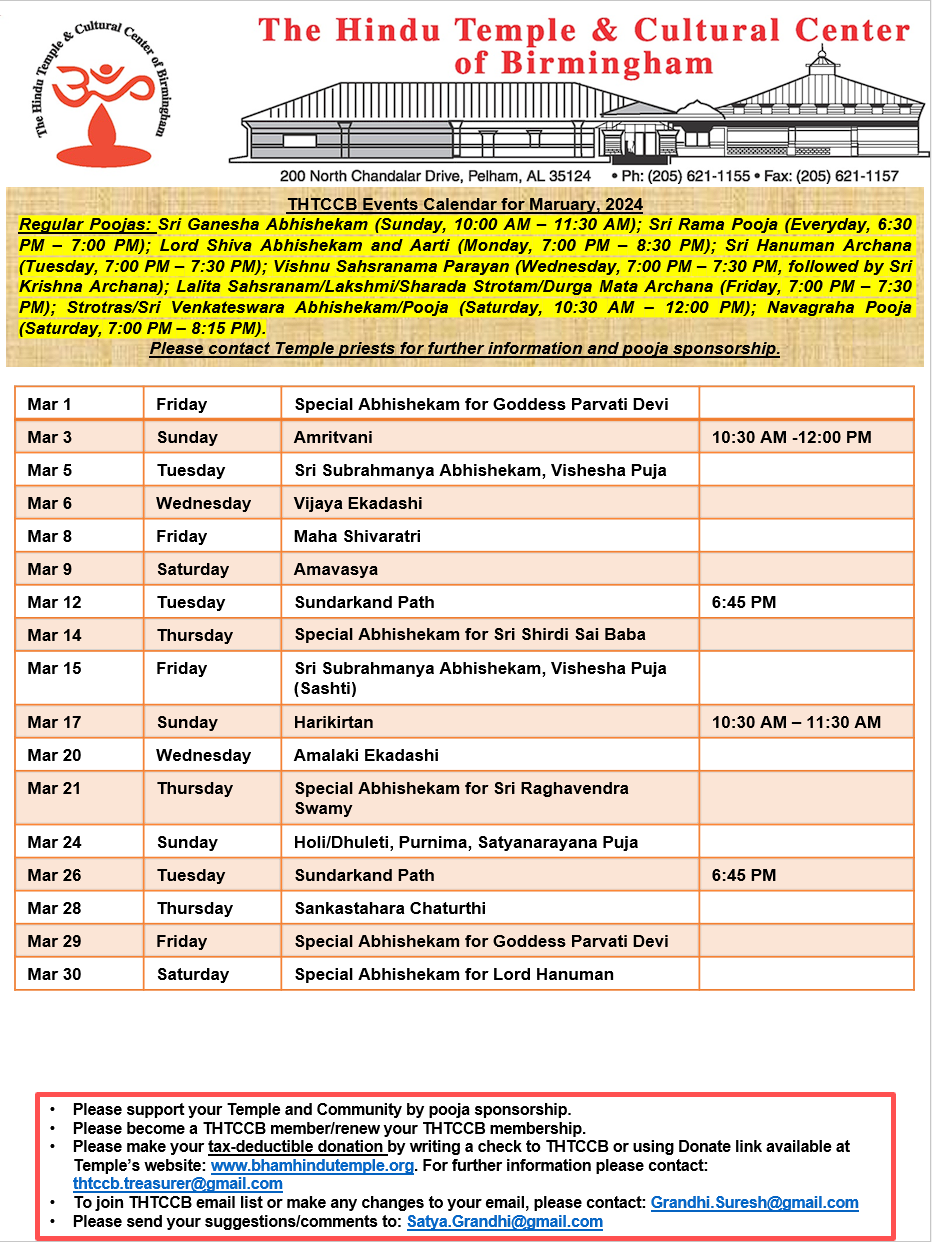
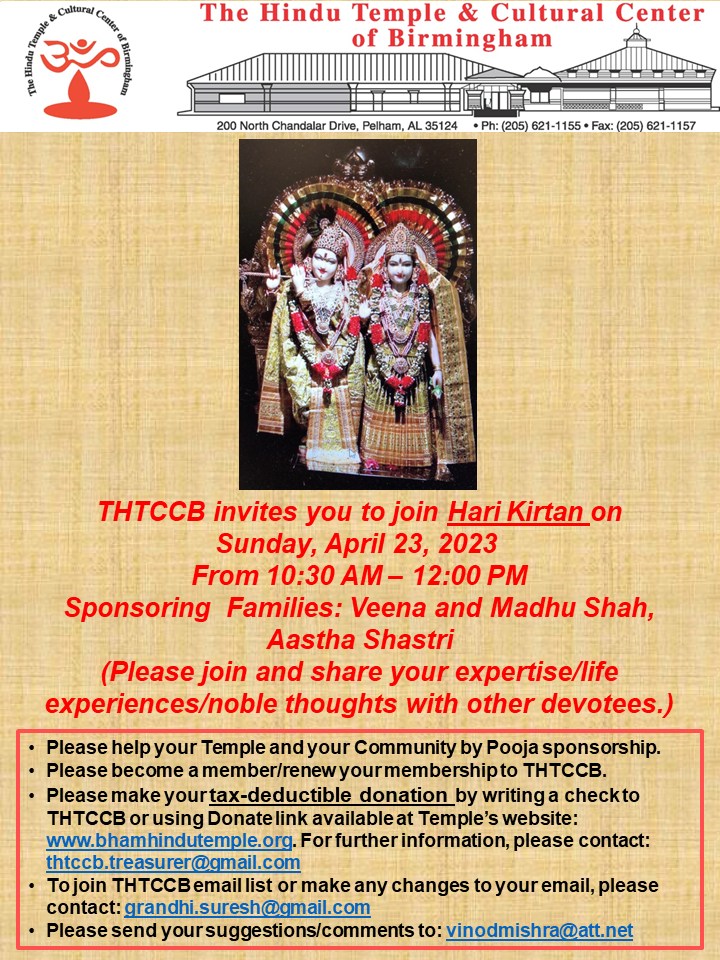
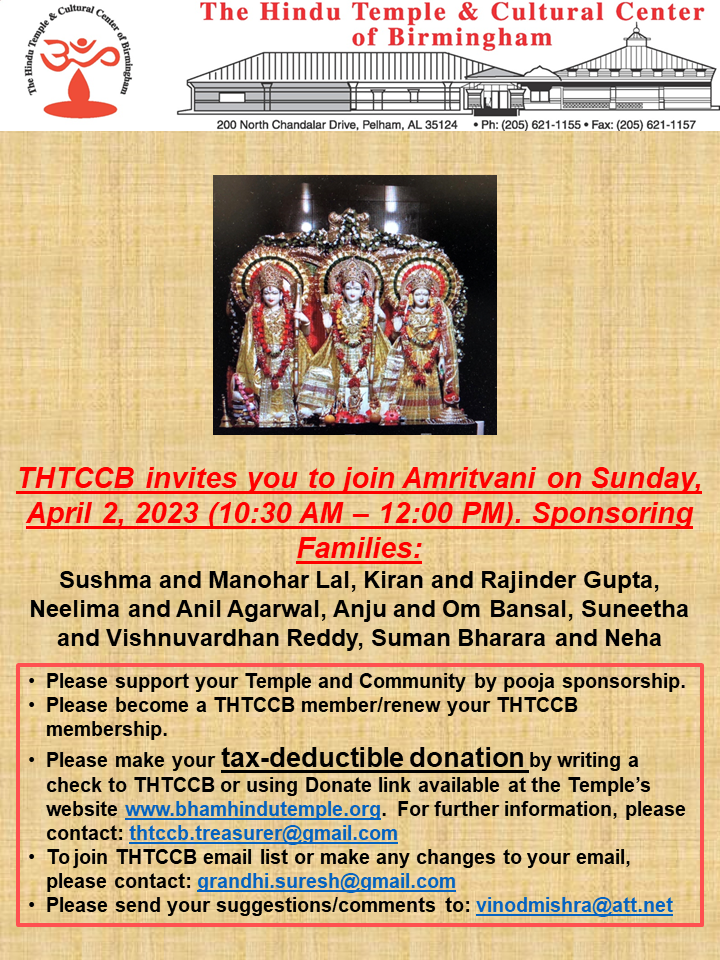
Our calendar was abundant with a myriad of well-received programs, ranging from daily and weekly pooja services to specially curated events. Highlights included Vaikunta Ekadasi, Subrahmanya Vigraha Pratishta, Ma Parvathi punah pratishta, and Diwali/Annakut Mahotsav. We also celebrated Dussehra, hosted a Ganesh Chaturthi Mahostav and Cultural event, and reveled in Sri Krishna Janmastami celebrations, and Mahavir Jayanti celebrations.
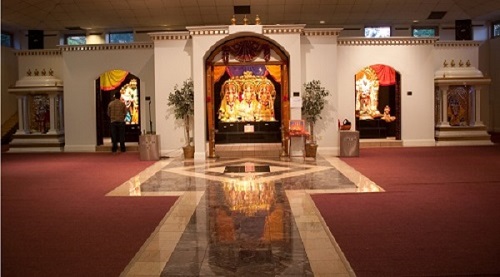
Moreover, we were honored to facilitate Pravachan by Sri Sampoornananda Giri Swamiji, Srimad Bhagavad Gita Parayana, and Suprabhata Seva and Tomala Seva by Tirumala Tirupati Devasthanam. We were also thrilled with the success of our Temple beautification project.
We could not have achieved these feats without your unwavering support. Your enthusiastic participation and generous contributions have been instrumental in the immense success of our events, fostering a sense of unity within our community.
As we stride into 2024, we are excited to share that we have a host of events lined up, particularly in the domain of pooja services. Additionally, we will be rebooting our educational programs to deepen our alignment with Sanathan Dharma teachings.
Once again, thank you for being a part of our community, and we look forward to your continued support in the coming year. Here’s to a fruitful and prosperous New Year 2024!
Warm regards,
Satya Grandhi, Chairman, THTCCB – Board of Trustees